
Latest Stories
The Gocycle Story: A British Icon on the Comeback?

Since relaunching the Velorution newsletter, I've lost count of how many people have written in about bikes they bought from the old Velorution shops. A few names keep coming up — Brompton, Strida, Moulton, Schindelhauer, Gocycle. There's something about these bikes that really stays with people. Years later, still riding them, still talking about them.
The Gocycle is one of that group. And right now, its story has taken a significant new turn.
A one-bedroom flat and a very big idea
Richard Thorpe spent years working as a design engineer at McLaren Cars and in the light electric vehicle industry before deciding to build his own urban electric bike from scratch. He didn't come from the cycling world. He came from a world of precision engineering, lightweight materials and obsessive attention to performance. And he applied all of it to a bicycle.
In 2002, Thorpe established Karbon Kinetics from his one-bedroom London flat, with the ambition of creating the world's best urban electric bike. Seven years of development followed. In 2009, the Gocycle G1 launched to international acclaim, winning Best Electric Bike at Eurobike and becoming the first injection-moulded magnesium alloy bicycle in history.
It was, by any measure, ahead of its time.
What made it special
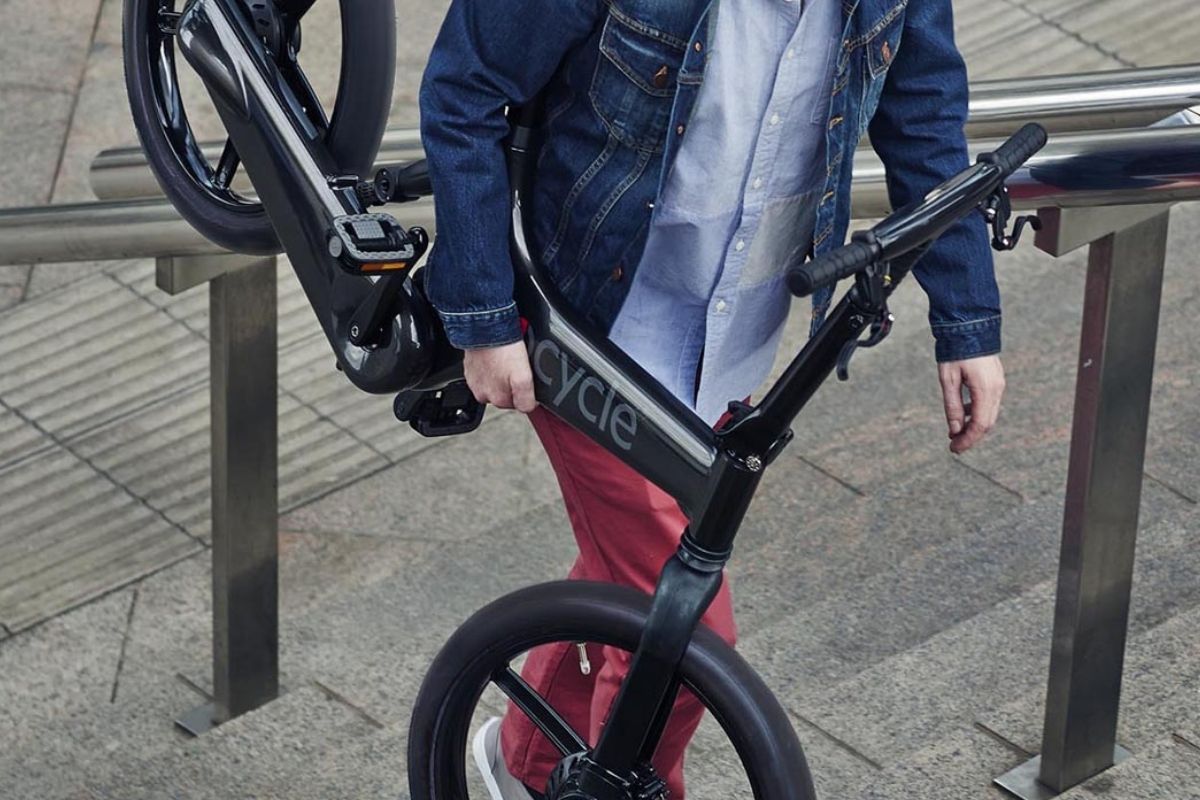
The Gocycle was not a conventional bicycle with a motor bolted on. It was designed from the ground up as an integrated urban machine, and the details reflected that.
The motor sits in the front wheel — unusual, but deliberate. It includes traction control, reducing motor power when the front wheel loses grip, just as it does in a car. The drivetrain is fully enclosed in Gocycle's patented Cleandrive system, which protects the mechanics from dust and water and keeps grease off your hands and clothes entirely. The wheels are single-sided, meaning you can change a punctured inner tube without removing the wheel at all.
The ride quality is excellent — stiff enough that you forget it has any folding joints in it, with 20-inch wheels and geometry close enough to a regular bike that it never feels like a compromise. Range on the current G4 is up to 40 miles. It folds in seconds.
Velorution stocked Gocycles for years. They were the kind of bike that stopped people in the shop. Not everyone bought one — the price made sure of that — but almost everyone wanted to understand how it worked.
The quiet years
The e-bike market boomed during and after the pandemic. Brands that had spent years building slowly suddenly found themselves with more demand than they could handle. For most, it was the moment everything accelerated.
For Gocycle, it went the other way.
Urban cycling news, honest stories, and a front-row seat as we rebuild Velorution from scratch. Free, every week.
Join 40,000+ following along
Following a 2024 restructuring, the brand launched a crowdfunding campaign aimed at rebooting and expanding its product line. The campaign drew attention to the fact that the business was in difficulty. Gocycle went into a quiet period, struggling to secure investment at exactly the moment its competitors were expanding.
For a brand with Gocycle's heritage, it was a painful thing to watch.
The comeback
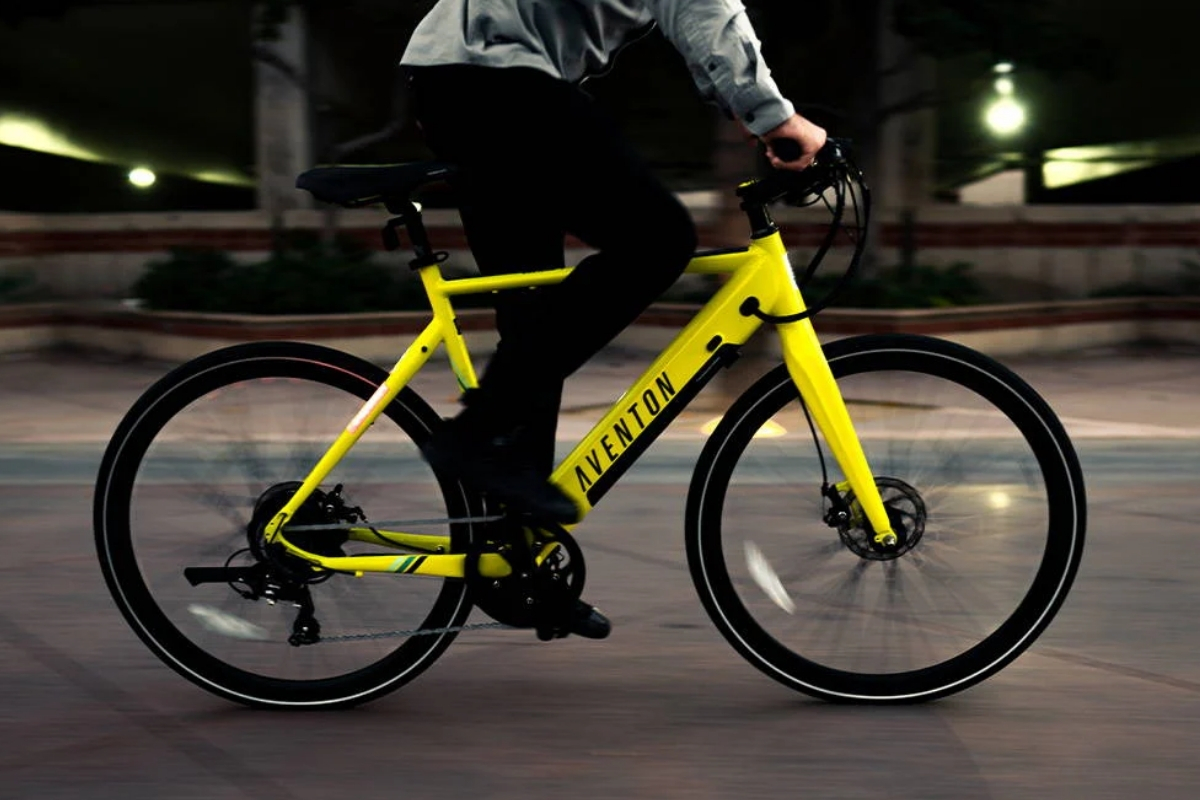
Gocycle has now ended its search for investment. JW Zhang, founder of Aventon, one of the biggest e-bike brands in North America, has acquired the brand.
Aventon has grown to place its bikes into over 1,800 retail stores in North America and is said to be a more than $100 million business. The strategic logic is clear: Gocycle brings premium design credentials, a devoted following and decades of proprietary engineering. Aventon brings a serious supply chain, manufacturing capability and global distribution.
The UK will remain central to Gocycle's plans, as will much of Europe, with the USA and parts of Asia also on the roadmap. A full relaunch was planned from early 2026, with a bike shop network as the intended route to market.
The question worth asking
This is where things get interesting — and slightly uncertain.
The Velorution Post
Real mail. Once a month.
We're all a bit digitally overwhelmed. So once a month I hand-pack an envelope and post it to you — a 16-page mini magazine, a letter, a collectable card. Things worth keeping, not junk through the door.

The Velorution Post
My pride and joy, through your letterbox
A 16-page mini magazine every month. No ads, just bicycle love. In the envelope with it:
- A letter from me
- A collectable trading card
- My real numbers, warts and all
Aventon generally targets the entry to mid-level of the e-bike market, rather than the top end where Gocycle has traditionally sat. That's not necessarily a problem. Access to Aventon's supply chain could bring Gocycle's prices down without compromising what makes the bike special. Or it could mean pressure to simplify, standardise, and sand off the edges that made Gocycle worth caring about in the first place.
The optimistic reading is that the two brands complement rather than compete with each other, targeting different customer tiers. The realistic one is that nobody quite knows yet — including, probably, the people involved.
What is clear is that the alternative — Gocycle disappearing entirely — would have been worse.
What the readers say
The people who bought Gocycles from Velorution are not sitting on the fence. They are, almost without exception, still riding them. One reader mentioned commuting on hers for years without a single mechanical issue. Another described it as the best money he'd ever spent on transport.
That kind of loyalty is hard to manufacture. It's what happens when a product is genuinely well made and genuinely thought through.
Whether the new Gocycle lives up to that standard is something we'll find out soon enough. But for now, it's back. And that's worth something.
Leave a comment (2)

Velorution Exclusive · October
Define Bicycle Mug
£18.00. One month only. Then it retires to the Velorution Vault and may never be seen again.
Get it before it's goneFrom the Collective


More stories


Dan · 21 July 2026
Richard Thorpe left Gocycle last autumn (look it up on his LinkedIn profile), Aventon has no plans for the brand, seems to be a dead end…
Tony Parrack · 26 June 2026
My Velorution-purchased Gocycle was a present from my wife and was used regularly for almost 10 years for when my knees felt a bit knackered to use my lovely Condor road bike for the 20 mile+ plus commute (with another 10 miles sometimes chugging around the West End). Unfortunately somebody decided their need was greater than mine and dismantled it 5 metres from a busy Starbucks – leaving the lock, which was kind I suppose tho most probably tjeir cjoice. I loved that bike, and Velorution (Jonathan, Conrad and all the others) were great people to deal with.