
Latest Stories
The Mamachari: Japan's Unsung Everyday Masterpiece

Around 16% of all trips in Japan are made by bicycle. That's five times more than Britain, and not far behind the Netherlands.
Now here's the strange part. Japan achieved this with almost none of the things we're told cycling needs. In Tokyo, just 1.6% of the road network has any cycling infrastructure at all. No sprawling web of protected lanes. No cycling superhighways. And absolutely no lycra.
Instead, Japan has the mamachari.
Mum's chariot
The name is slang for "mum's bike", and it tells you everything about its purpose.
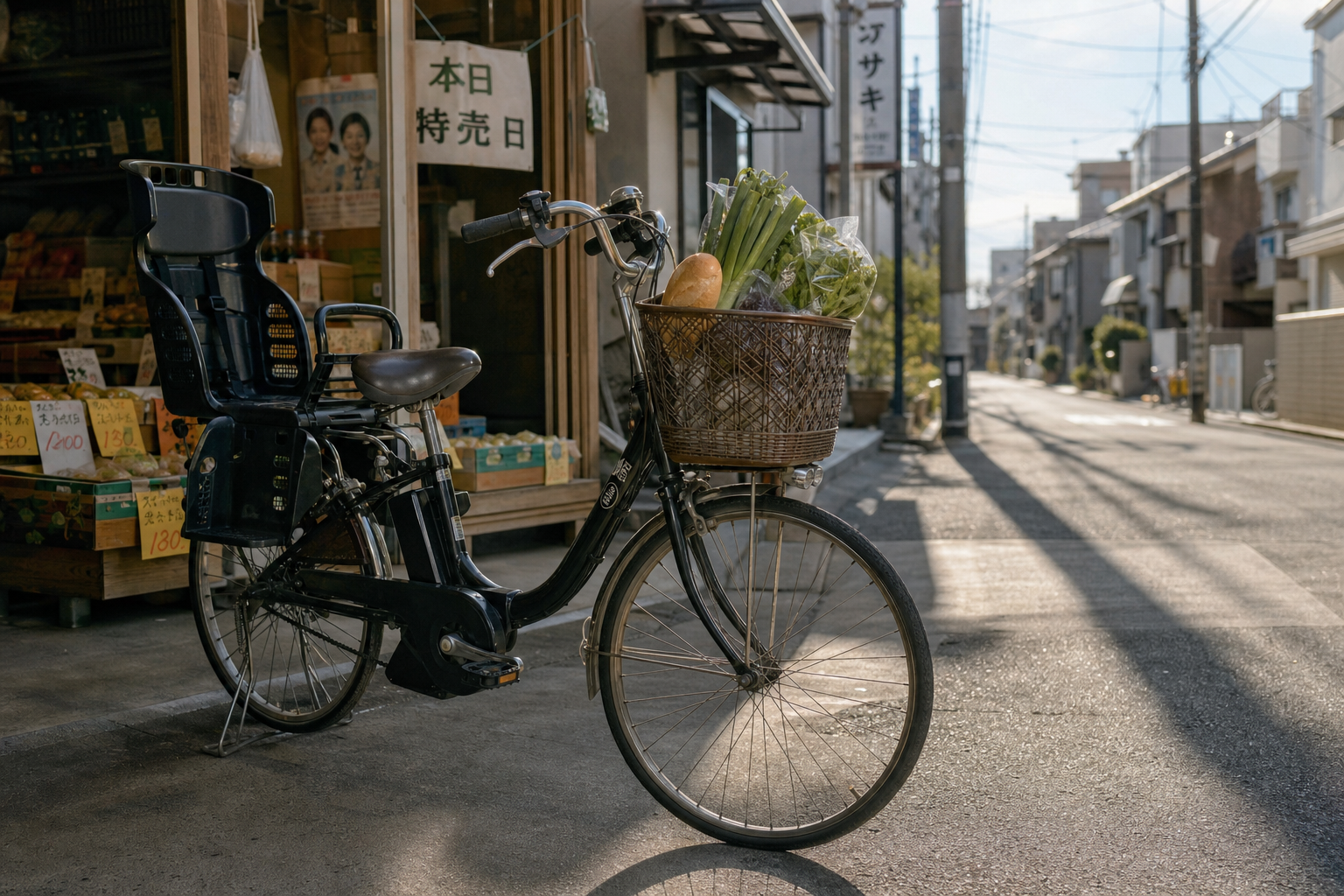
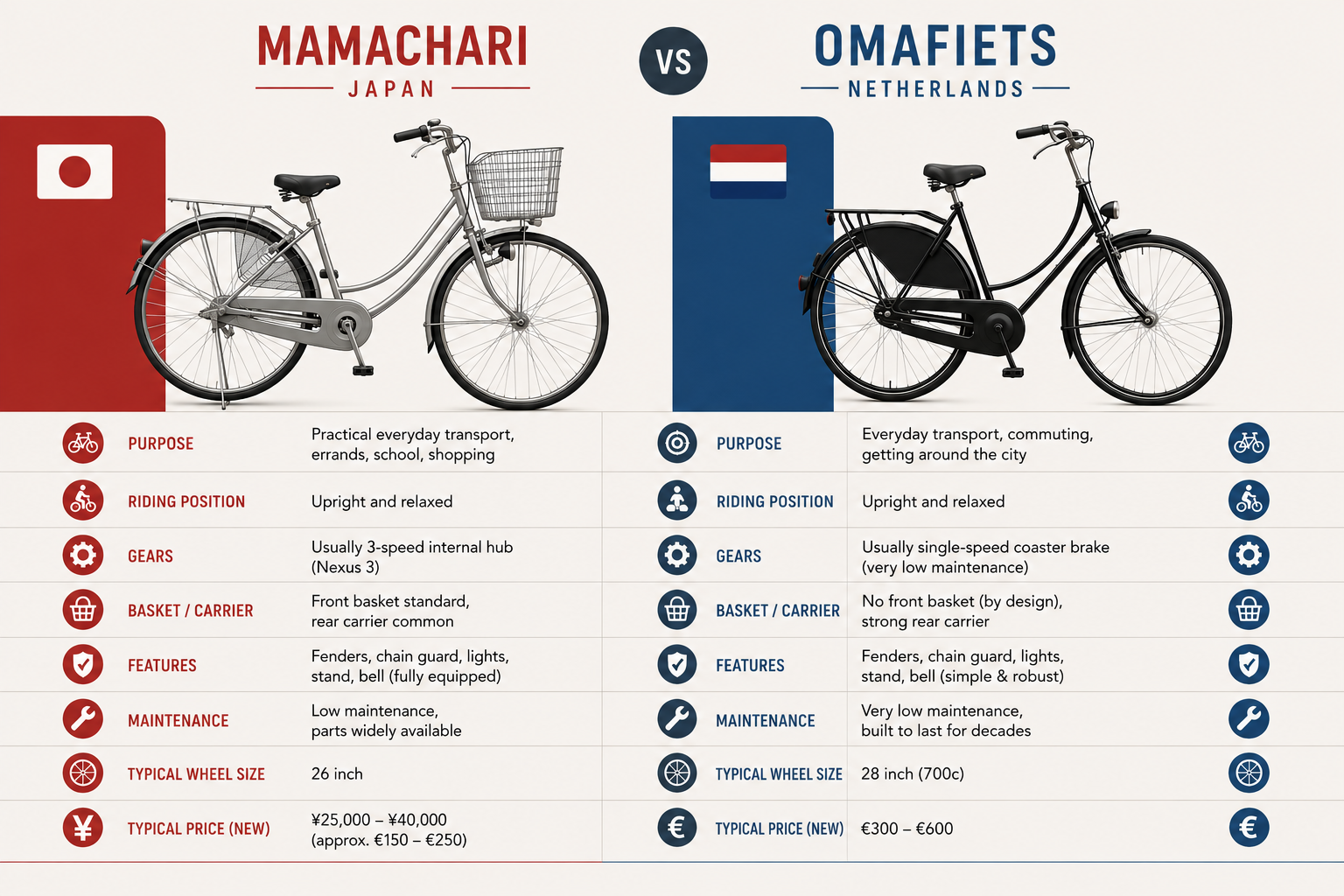
A mamachari is a heavy, upright, step-through bicycle with a basket on the front, a dynamo light, mudguards, a built-in wheel lock and, very often, a child seat or two. Prices start at under ¥10,000, which is to say: closer to a kettle than a carbon race machine.
Nobody polishes a mamachari. Nobody upgrades the groupset. It gets ridden to the shops, to the station, to the school gates, left out in the rain, and it just keeps working. It is less a bicycle in the British sense and more a household appliance that happens to have wheels.
The Smart Lady
The story starts in 1956. Before then, women's bicycles in Japan were lumbering machines weighing 22 to 24kg with a high centre of gravity, and mostly ridden by the young.
Then came the Smart Lady: lighter, lower, more stable, with a step-through frame that let women in skirts hop on and ride without ceremony. It even had a removable front basket. It became an instant bestseller, and every mamachari since is its descendant.
The timing was perfect. Post-war Japan was rebuilding around dense city centres where few people owned cars, and the bicycle quietly became the glue between home, shop and train station. By the 1970s, cycling in Japan wasn't a movement or a hobby. It was simply how people got around.
What "normal" looks like
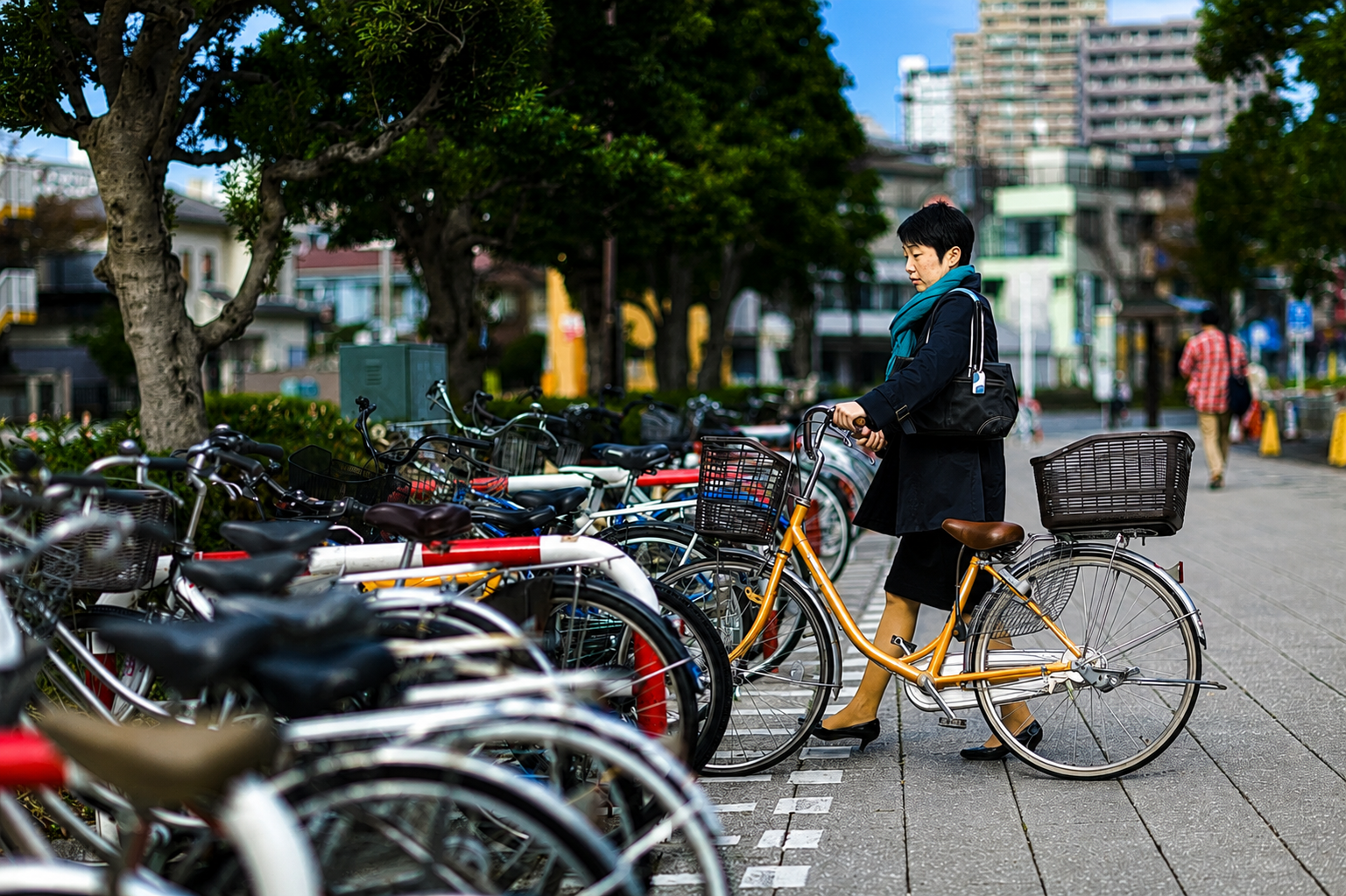
Transport researchers have a favourite test for whether cycling in a city is genuinely normal: count the women.
Where cycling is dangerous or dominated by sport, riders skew heavily male. Where it's an everyday tool, the numbers even out. A 2021 study of 17 countries found that Japanese cities have the highest proportion of female cyclists in the world. In Tokyo, 57% of people on bikes are women. In Osaka, it's 64%. Both beat the Netherlands.
And what are all these people doing? Mostly the shopping. According to the Japan Bicycle Promotion Institute, errands top the list of reasons for bike trips, ahead of commuting. No Strava segments were harmed in the making of this culture.
Urban cycling news, honest stories, and a front-row seat as we rebuild Velorution from scratch. Free, every week.
Join 40,000+ following along
Meanwhile, in the Netherlands...
If all this sounds familiar, it should. The Dutch got there first.
The omafiets, literally "grandma bike", is a design that has barely changed since 1911. Steel frame, step-through, 28-inch wheels, skirt guard over the rear wheel, dynamo lights, and a weight that can top 25kg with accessories. The name only dates from the 1970s; the bike itself was already old when your actual grandma was young.
And far from being a museum piece, it remains a national icon, ridden by students, office workers and grandmas alike.
Two nations, on opposite sides of the planet, with different histories, climates and cities, independently arrived at the same answer: the best everyday bicycle is not light, fast or clever. It's heavy, comfortable, cheap and boring.
Boring wins
While Britain spent decades selling cycling as sport, Japan and the Netherlands sold it as an appliance. And nobody needs padded shorts to use a washing machine.
The mamachari even went electric before the rest of the world caught on. Yamaha built the world's first electric-assist bicycle in 1993, and Panasonic followed with the first electric mamachari in 1998. Today the e-mamachari is effectively the family car of urban Japan: parents hauling two kids and the weekly shop up a hill without breaking a sweat.

The Velorution Post
Real mail. Once a month.
We're all a bit digitally overwhelmed. So once a month I hand-pack an envelope and post it to you — a 16-page mini magazine, a letter, a collectable card. Things worth keeping, not junk through the door.

The Velorution Post
My pride and joy, through your letterbox
A 16-page mini magazine every month. No ads, just bicycle love. In the envelope with it:
- A letter from me
- A collectable trading card
- My real numbers, warts and all
The idea is spreading, too. London has had a shop dedicated to mamachari since 2013, and imported mamachari are winning fans in Tanzania for their sheer indestructibility.
The lesson
None of this is an argument against bike lanes. Japan's sidewalk-sharing arrangement is a historical quirk (a "temporary" law from 1970 that never went away), and even Tokyo is now committed to expanding its cycle network.
But it is an argument about what cycling is for. Japan and the Netherlands both understood that the bicycle's superpower isn't speed. It's ordinariness. A machine for carrying a person, a child and a bag of shopping from A to B, in normal clothes, without thinking about it.
The most radical bicycle in the world, it turns out, is the ordinary one.
Leave a comment (1)

Velorution Exclusive · October
Define Bicycle Mug
£18.00. One month only. Then it retires to the Velorution Vault and may never be seen again.
Get it before it's goneFrom the Collective


More stories


Werner · 16 August 2026
Need to add that signalised intersections are bicycle friendly as you can ride along to footpath and across the road when the road traffic has a green light in the direction you are riding