
Latest Stories
Pashley Turns 100: Bucking the Trend for Longevity

In 1926, William Rathbone Pashley started building bicycles in a workshop in Birmingham. A hundred years later, his company is still making bikes in Warwickshire. Almost every other British manufacturer from that era is gone.
But this isn't a story about nostalgia. It's about what happens when a company decides not to follow the market somewhere it doesn't want to go.
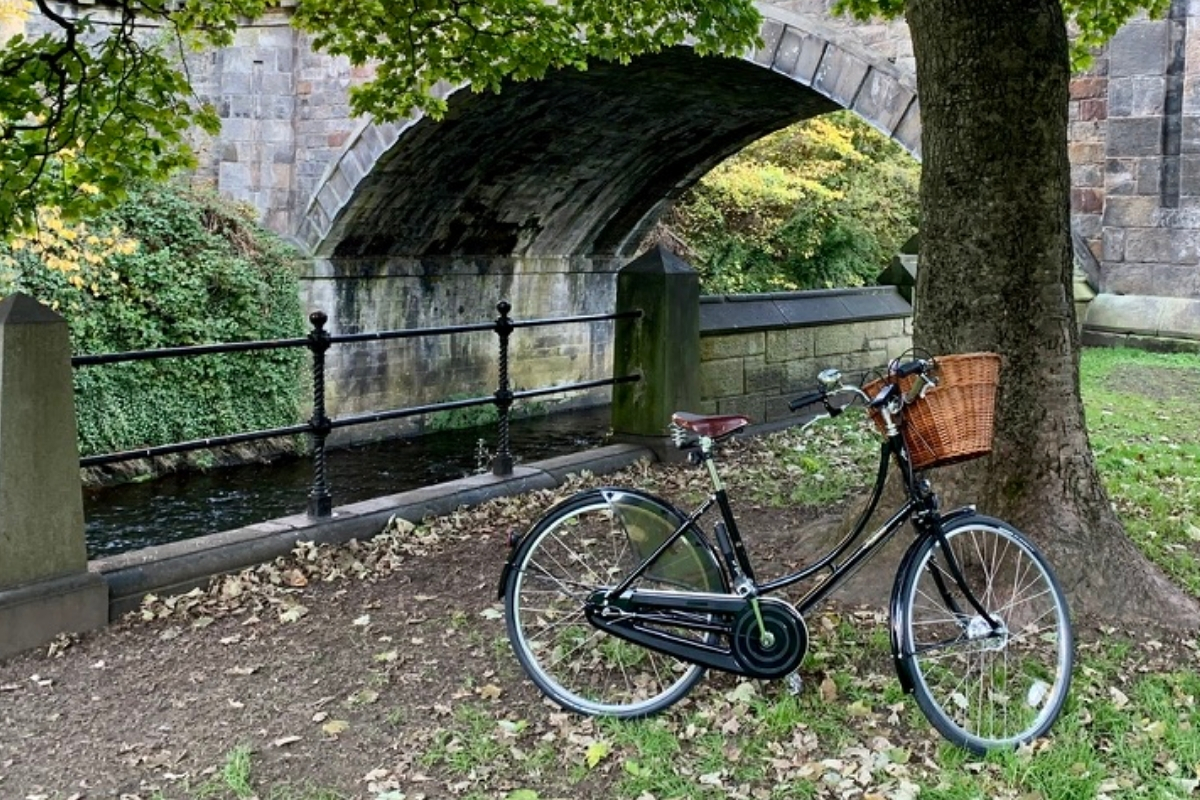
1926–2026: A hundred years in Warwickshire
Pashley started as a small-scale builder making delivery bikes and trade cycles. The kind of machines that moved goods through towns before vans took over. Solid frames, steel rims, weight that didn't matter because function came first.
By the 1950s, British cycling manufacturing was already shrinking with Raleigh dominating the industry. Smaller makers either sold out, moved production overseas, or closed. But Pashley stayed put. They moved to Stratford-upon-Avon in 1960 and kept building the same type of bikes they always had.
When the mountain bike boom arrived in the 1980s, Pashley didn't make mountain bikes. When carbon frames became standard in the 1990s, they kept welding steel. When the industry moved to Taiwan and China, the Stratford factory remained.
What kept them going wasn't stubbornness for its own sake. It was a consistent customer base that wanted exactly what Pashley made: heavy, durable, repairable bikes for daily use. Postmen. Delivery riders. People who needed a bike to work, not to upgrade.
The company nearly folded in the early 2000s after sales dropped. The factory was too small to compete on price, too traditional to attract trend-focused buyers. Then something shifted. A growing number of urban riders started looking for bikes that didn't look like sports equipment. Pashley's whole catalogue suddenly made sense again.
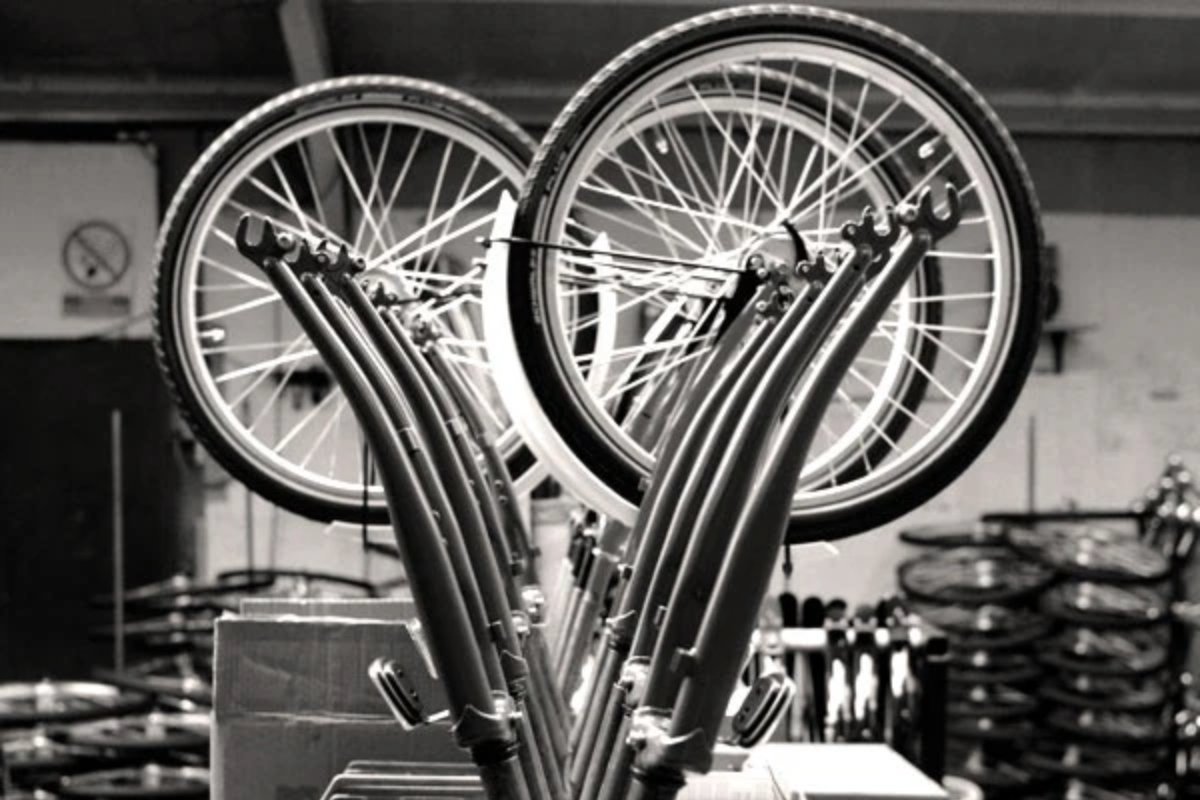
The bikes that didn't change
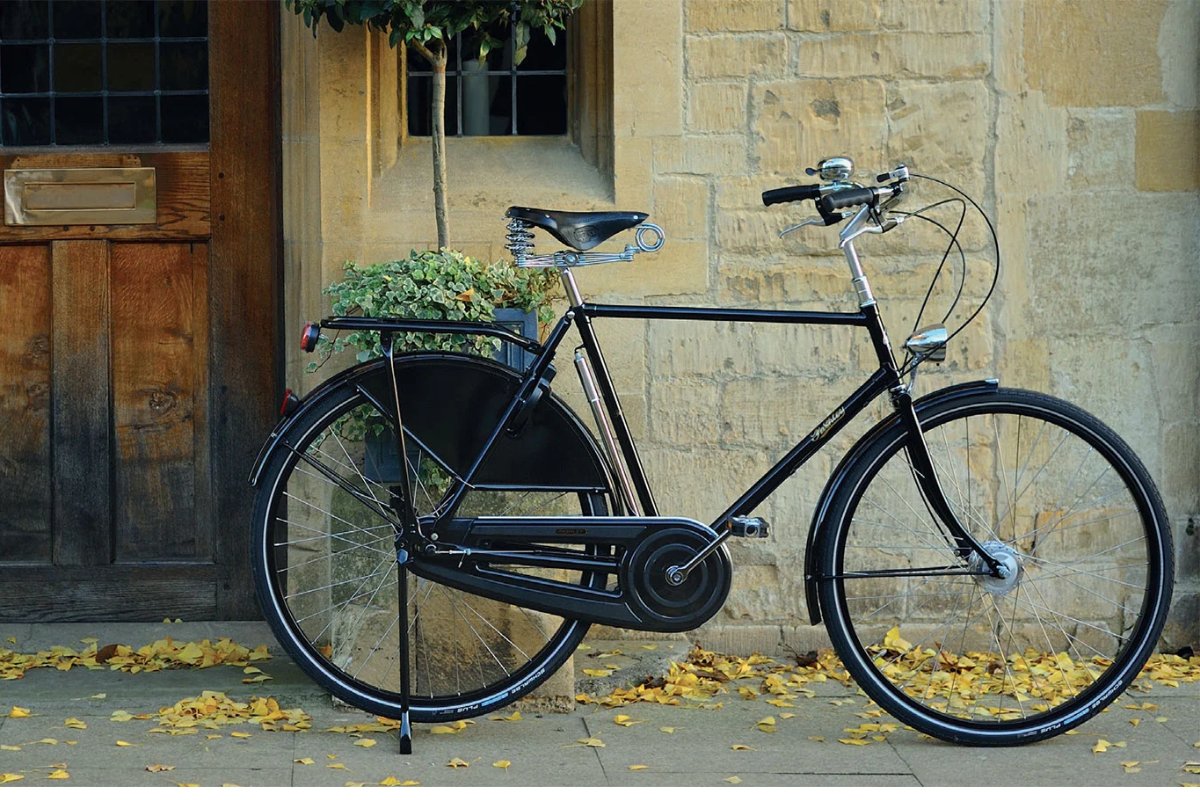
Three models define Pashley: the Roadster, the Princess, and the Guv'nor. All three have remained essentially unchanged for decades.
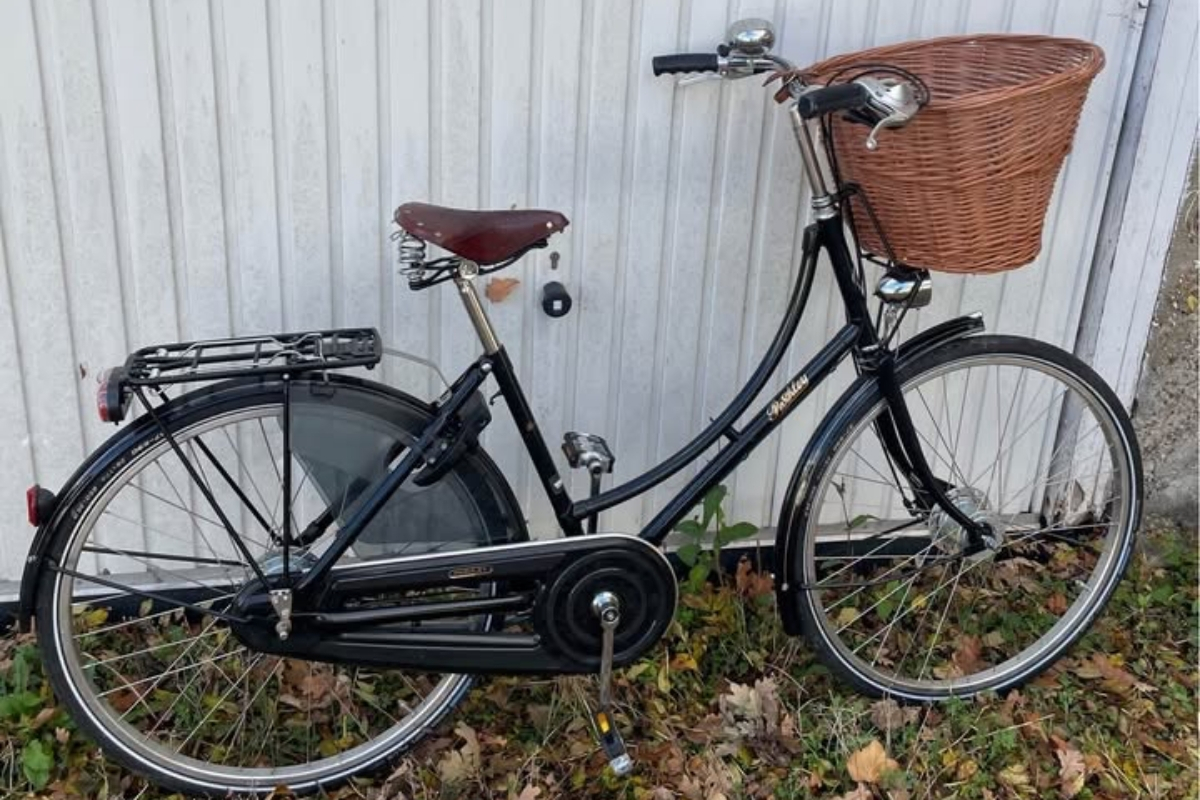
The Roadster is the core machine. Upright position, full chaincase, rod brakes or hub gears depending on spec. It looks like a bike from 1950 because the design is from 1950. Weight: around 20kg. Speed: irrelevant. Punctures: rare, because the tyres are thick and the frame takes full mudguards as standard.
The Princess is the same concept with a step-through frame and a wicker basket. It became iconic not because Pashley marketed it that way, but because people kept buying it and keeping it for years. You see them locked up outside London schools, outside Cambridge colleges, outside anywhere that people ride slowly and regularly.
The Guv'nor is lighter, sharper, closer to a traditional roadster but simplified. Fixed gear or three-speed. No unnecessary components. It works well in cities because there's nothing to go wrong that you can't fix yourself.
What makes these designs worth keeping isn't romance. It's that they solve a specific problem: moving a person through a city without requiring specialist knowledge, constant maintenance, or fear of theft. They're too heavy to steal easily. Too simple to strip for parts. Too durable to bin after a few years.
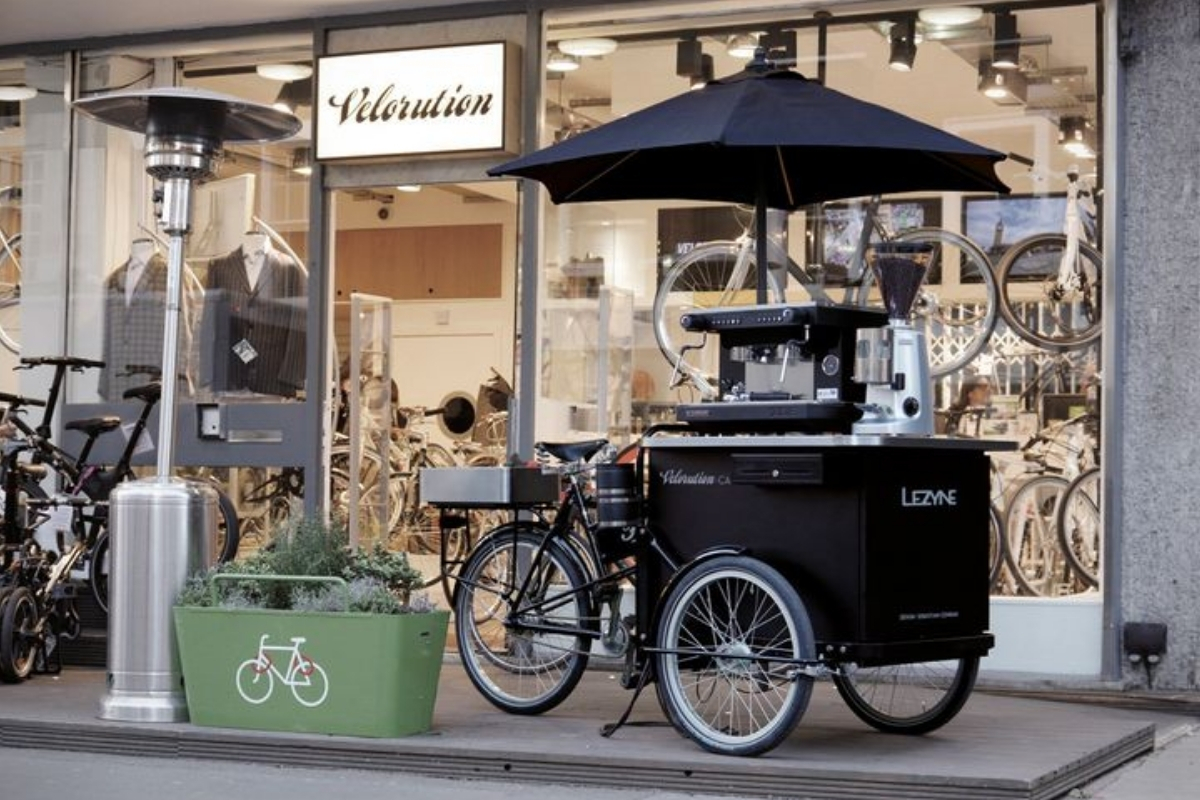
Pashley and Velorution: a natural fit
When Velorution opened its first store in London, Pashley bikes were central to the range. Not as retro curiosities. As genuinely useful machines for people who wanted to ride without joining a subculture.
The original Velorution customers weren't racing. They weren't training. They were commuting, shopping, moving through the city at a human pace. Pashley made exactly the right bikes for that. Comfortable geometry. Reliable components. A look that said 'I ride a bike' rather than 'I am a cyclist.'
Urban cycling news, honest stories, and a front-row seat as we rebuild Velorution from scratch. Free, every week.
Join 40,000+ following along
Several of the staff at the Broadwick Street and Lamb's Conduit Street stores rode Pashleys themselves. That wasn't a brand requirement. It was just what made sense. When you're working in a bike shop all day, you want to ride home on something comfortable that you don't have to think about.
Customers responded. The Princess became one of the most-requested models. People would come in looking for 'a proper bike' without quite knowing what that meant, and they'd leave with a Roadster. Word spread. The bikes worked. They kept working.
What manufacturing in Britain actually means now
Pashley frames are still hand-brazed in Stratford-upon-Avon. That part is true and verifiable. But 'Made in Britain' needs context.
Most components—gears, brakes, wheels, saddles—come from the same suppliers that every other bike brand uses. Sturmey-Archer hubs (British-designed, now made in Taiwan). Brooks saddles (still made in Smethwick). Shimano gears (Japan). Schwalbe tyres (Germany).
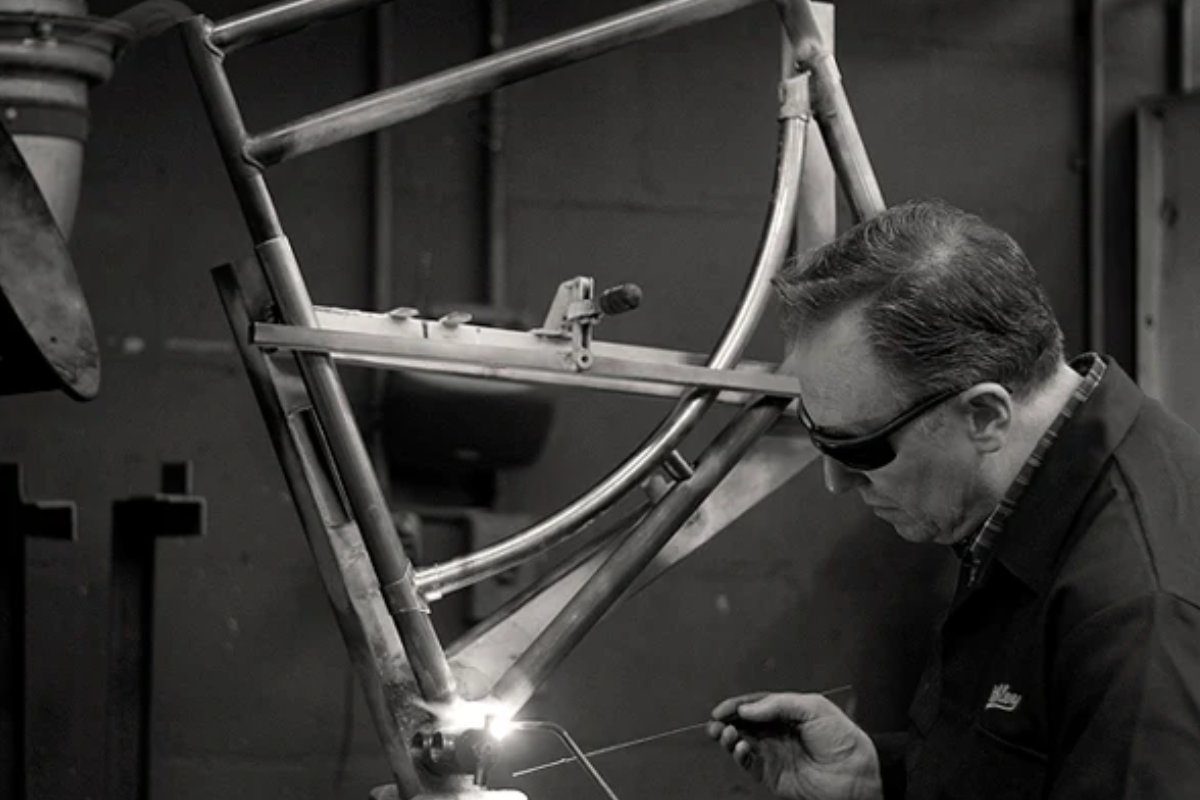
What happens in the factory is frame-building, finishing, and assembly. Steel tubes are cut, mitred, and brazed by hand. Frames are painted. Components are fitted and tested. It's skilled work. It's also a small percentage of the total manufacturing chain.
That doesn't make the 'British-made' claim dishonest. It just means the reality is more specific than the romance. What Pashley controls is the design, the frame construction, and the final quality check. That matters. But it's not 1926 anymore. No bike brand makes every part in-house.
Why Pashley still matters
Pashley represents something increasingly rare: a company that defined what it made and refused to redefine it every season.
The Velorution Post
Real mail. Once a month.
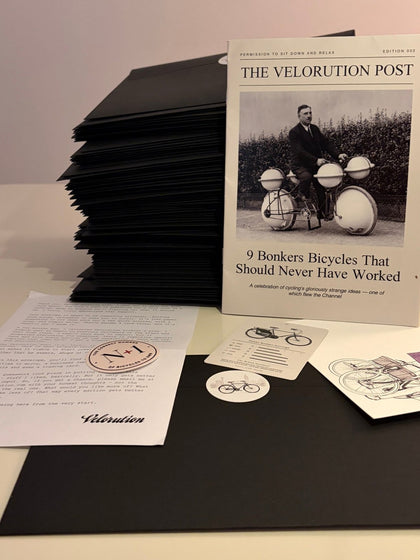
We're all a bit digitally overwhelmed. So once a month I hand-pack an envelope and post it to you — a 16-page mini magazine, a letter, a collectable card. Things worth keeping, not junk through the door.

The Velorution Post
My pride and joy, through your letterbox
A 16-page mini magazine every month. No ads, just bicycle love. In the envelope with it:
- A letter from me
- A collectable trading card
- My real numbers, warts and all
In an industry built on obsolescence—new standards, new axle widths, new bottom bracket threads—Pashley kept making bikes that can be fixed with basic tools and parts that don't expire. That's useful. More useful than heritage branding or vintage aesthetics.
For riders who want a bike that lasts, that doesn't need upgrading, that won't be discontinued next year, Pashley still makes sense. The same sense it made in 1926. The same sense it made when Velorution opened. The same sense it makes now.
A hundred years is a long time to make the same thing. It's an even longer time to keep being right.
Leave a comment
No comments yet — be the first.

Velorution Exclusive · October
Define Bicycle Mug
£18.00. One month only. Then it retires to the Velorution Vault and may never be seen again.
Get it before it's goneFrom the Collective


More stories

